Decoding Event Marketing: What Works, What Doesn't. (Webinar Recap)
 Welcome to the first Expo Pass webinar recap of 2024!! We’re kicking off the year with a great topic that’ll set you up for a successful year of event marketing.
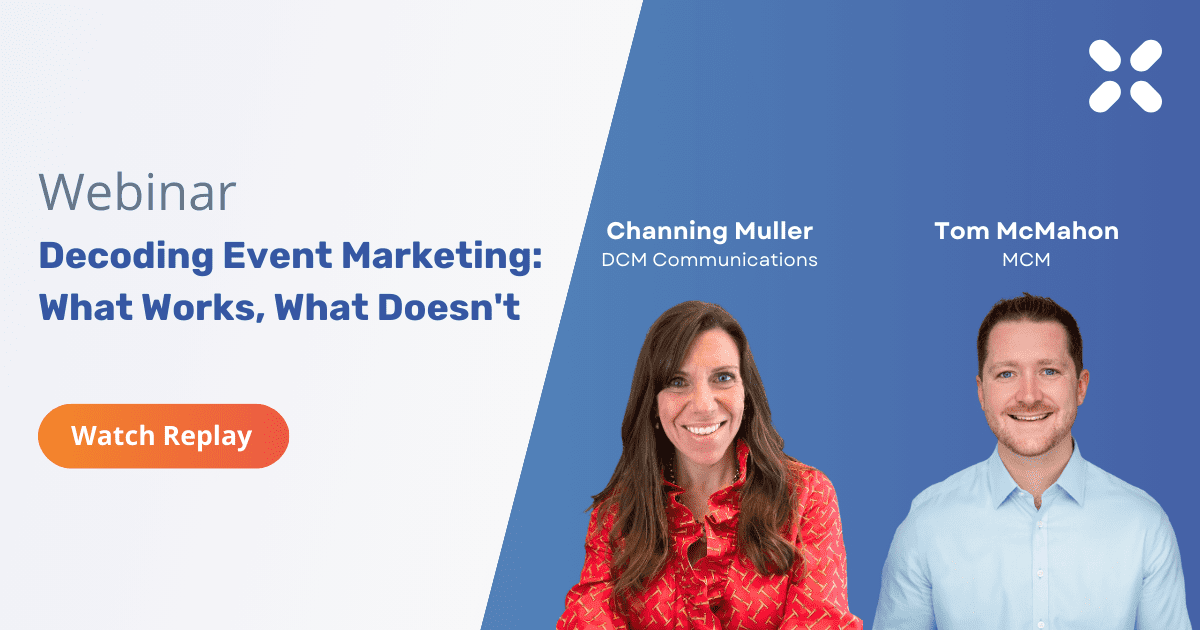
Our recent webinar, Decoding Event Marketing: What Works & What Doesn’t, featured a pair of marketing gurus who graciously shared their wisdom. Channing Muller (President of DCM Communications and award-winning writer) and Tom MacMahon (CEO of MCM) joined us to discuss the relationship between technology, event marketing, and social media, plus shared some insider tips on beating creative burnout.
It was a lively and informative session with some firecracker questions. So, without further adieu, let’s learn how to elevate our marketing game to bring new attendees into our orbit.
https://giphy.com/gifs/season-20-the-simpsons-20x7-3orifeps8d653N6MLu
Welcome to the first Expo Pass webinar recap of 2024!! We’re kicking off the year with a great topic that’ll set you up for a successful year of event marketing.
Our recent webinar, Decoding Event Marketing: What Works & What Doesn’t, featured a pair of marketing gurus who graciously shared their wisdom. Channing Muller (President of DCM Communications and award-winning writer) and Tom MacMahon (CEO of MCM) joined us to discuss the relationship between technology, event marketing, and social media, plus shared some insider tips on beating creative burnout.
It was a lively and informative session with some firecracker questions. So, without further adieu, let’s learn how to elevate our marketing game to bring new attendees into our orbit.
https://giphy.com/gifs/season-20-the-simpsons-20x7-3orifeps8d653N6MLu
How can event organizers utilize technology to enhance promotions?
“As wonderful is the talk of AI, there is only one redeeming factor long-term—the first draft.” — Channing Muller.It didn’t take long for AI to become the center of this discussion. As the new kid on the block, it’s received massive praise and criticism over the past year. However, Channing offered a balanced perspective on how this technology can best be used. AI tools are best used as a brainstorming buddy. They can ease the terror of the blank page by producing initial passes on various marketing pieces like emails, taglines, or whole campaign storytelling. Once this first draft is complete, it’s paramount that you reintroduce the human element. Read everything, make adjustments yourself, and decide on what the best approach is amongst yourselves. Don’t just approve the first thing AI spits out.
“It’s that magic and that spark that comes from human interaction… that gives me the faith that creativity and human interaction is still so powerful.” - Tom MacMahon.Tom had an interesting variation on this approach, highlighting the core issue with trusting AI to do the whole task. His team at MCM uses AI software like ChatGPT to develop various ideas for addressing a given brief. They put those suggestions on a whiteboard and then deliberately avoid any of those ideas. They do this because AI produces results based on an average of available information. Therefore, you’re getting a trivial or standard suggestion. This is why relying on human creativity for the bulk of your work is crucial, but AI can be beneficial in ruling out typical ideas. As Tom suggested, an additional use for AI is coming up with buyer personas, learning what their interests are and what is trending within your given demographic. This background can then be used to guide human creativity in event marketing. https://giphy.com/gifs/internet-tei52cyY5mroA
How often should organizers refresh their creative strategies?
“Occasionally is probably the most realistic for all marketers… as long as there is a regular point every couple months where we’re taking a step back and asking ‘are we doing the right thing?’” - Tom MacMahonChanning introduced the Stanley example. The Stanley brand is 110 years old, and for most of its lifetime, it has been marketed toward workmen and outdoorsmen. The now-famous cup was introduced nearly 10 years ago. However, around 2019, the company pivoted its focus to women between 35-50. It wasn’t long before the cup became a viral sensation! This example highlights the importance of refreshing not just your marketing creativity but also your target demographic. So, how often should event marketers update their strategies? Attendee Poll: How often do you update your strategy?
- 43% occasionally updated as needed
- 33% regularly sought out new ideas
- 18% rarely or never updated their strategy
“As well as benchmarking our successes, we’ve also got benchmarks for our failures. We want to be failing every corner. If you’re not failing, you’re not learning.” - Tom MacMahon.You don’t want to change your marketing plan just for the sake of it. If you find an effective strategy that your audience can’t resist, then brilliant! However, remember that while a general framework is applicable over the long term, your audience’s perspective, values, interests, and more may adjust over a period as short as three months. As their lives change, so does their buying persona. This is where tailored marketing comes in. Revisit your event marketing strategy and continue researching your demographic for opportunities to create more detailed, targeted campaigns. https://giphy.com/gifs/fallontonight-art-alexander-skarsgard-artistic-xhTfrLnXJpexXuijB3
How can event planners leverage creativity to market events?
“If you build it, and tell them about it, and get them excited for it—then they will come.” - Channing Muller.Channing introduced the concept of “segmented messaging.” This strategy emphasizes tailored creativity based on the buyer’s actions. For example, if an attendee has registered for an event, they should receive different messaging than a potential buyer who hasn’t registered. Tom utilized tailored messaging at every funnel stage and for each platform based on the audience’s desires. While this made his campaign more fun and engaging, the real upshot was doubled ROI and a 50% reduction in marketing costs—now that’s effective marketing. Personalized marketing, like personalized event planning, creates a deeper connection with your audience. Their regular engagement (“regular” being the important word) with marketing content builds hype for the event, and the more it speaks to their specific interests (what they want to get out of the event), the more excited they’ll get. Once they arrive on-site, they’ll be full-to-bursting with enthusiasm! People have a lot to think about these days. They may not remember your event if they registered for it months in advance. It’s hard to get someone excited when they forget you exist. You need to remind people of what’s coming, and they’ll appreciate these reminders as they free up space in attendees' minds to worry about other stuff. Leveraging creativity doesn’t just mean the creativity you put into posts or email copy. The most important creative is the creativity you put into a marketing strategy. Segmented messaging provides a flexible framework that keeps your event in attendees’ minds, builds enthusiasm, and creates a stronger connection with your brand or event. https://giphy.com/gifs/transparent-season-3-amazon-video-original-l2SpRK14D6cvy6Uxi
Which social media platforms are best for marketing?
“Are they there [on social media] to be informed or entertained?” - Channing MullerA common reason for avoiding social media is that “my audience isn’t on there.” This misconception has recently been leveled at TikTok, but every platform has been the victim of this opinion. TikTok has over 1 billion monthly users. It doesn’t matter what industry you’re working in; your audience is there in some capacity. Audience Poll: which platforms are the hardest for you? *In order of difficulty*
- TikTok
- X (Twitter)
“Every event is an opportunity for marketing [material].” - Channing MullerThe problem with X (Twitter) Brands have abandoned X, and for good reason. The platform is historically unreliable and only grows more erratic by the day. According to Tom, finding and maintaining an audience on this platform would take posting a whopping 14x a day. Who has that kind of time? Channing shared one valuable aspect of X: the presence of journalists on the platform. If you’re looking to connect with journalists to promote an upcoming event or leverage a recent piece written by them that is related to your event, then X is your platform. However, given the massive amount of work required to get any valuable response from the platform and its unreliability, it’s best to leave X to the journalists and focus your efforts elsewhere—like Instagram and TikTok. https://giphy.com/gifs/email-d8v55gXkiNj3y
Should we still use email?
“Because email is so well established, it’s almost a punching bag for these new platforms that come along. ” - Tom MacMahon.Yes. Email is still essential to your marketing strategy and will remain essential for a long time. The excitement generated by new platforms can easily obscure the importance of this long-established tool for connecting with your audience. Social media may be at the top of the marketing funnel, but email is vital to getting your audience from initial interest to in-person enthusiasm. Unless you’re selling candles or handbags, most buying still occurs on a landing page. And once they’ve made a purchase, what do they receive? An email! So don’t abandon the grandfather of online marketing just because Gen-Z has made TikTok the popular platform of the day. Remember, sending regular emails with a segmented messaging approach is essential to keep your audience engaged and build excitement for what they will experience once they arrive. Additionally, email is what you own. Instagram, Facebook, TikTok and especially X are in the hands of owners who can do whatever they like with them. You could wake up tomorrow, and your audience on Instagram could disappear. Email is always in your control, guaranteeing your connection remains strong until they hit “unsubscribe.” Email presents unique opportunities for event sponsorships, too! Help sponsors get their products out there by including spotlights in various emails. You’ll help these event partners gain exposure while garnering enthusiasm among attendees. Think of emails as your one-on-one connection with individual attendees. Social media is great for building community, but email is where you build relationships. https://giphy.com/gifs/cbs-ghosts-cbsghosts-ghostcbs-nSybOPZ3PJ7KplzvRX
QnA
As always, we had a wonderful, engaged audience who asked enlightening questions throughout the webinar. We’ve included a few below that cover topics ranging from burnout and content creation to the looming question—will AI replace us? Could AI replace event planners? In short, no. AI isn’t going to replace event marketers any time soon. This is for a few reasons. First, as mentioned above, AI software often spits out the average answer and sometimes gives incorrect information. The human element is essential to avoid trivial marketing suggestions or outright mistakes from getting to your audience. Think of the fears expressed when ATMs arrived. Some people were concerned that bank tellers would disappear, but they didn’t. We not only need humans but also want humans to be at the center of our interactions. As Tom said, “No matter how much it (AI) grows, there’s still going to be a need for brilliant creatives to utilize it.” How do you restart creatively after burnout? Introducing Channing Muller’s Two “F” Rule: Food and Fresh Air! It’s easy to forget how much time has passed since you last nourished your body and mind with food and fresh air. Sitting before the computer for hours can fry your creativity and leave you feeling sluggish. If this is the case, get up, eat a protein bar, go for a walk, a run, or sit in your garden (if you have one). This simple act can make a huge difference in how you feel. Tom offered a fun suggestion. When experiencing creative burnout, think back to a childhood favorite that woke up the creativity in your heart. For him, it’s watching episodes of Tom and Jerry. This is a great way to bring the inner child into your marketing efforts. Another great option is getting inspired by what other people are doing on social media. Give credit where necessary, but there’s nothing wrong with feeding your creative tank with content made by your favorite creators. How do you develop accountability with the sales team to ensure you receive the needed data? If everyone is in person, get up and walk over to the sales team, get in front of the person you want to speak to and make your request. Frame it in a way that highlights how it can help the salesperson accomplish their goal (increasing sales), and they’re more likely to provide the data you need to supercharge your marketing efforts. If you aren’t in the same building, contact the person in charge of the sales team. Inform them of your needs and make sure it emphasizes a shared goal—to improve sales/conversation. This way, you’ll build a bridge between your departments. What is the most valuable content type for social media? The most valuable pieces of content are the ones that appeal to your audience's interests and needs. Remember, ask yourself why they are on the platform, to begin with, and let the answer guide your content creation. It’s worth knowing which content types the algorithm is prioritizing—Instagram is pushing the reels right now—but the content that feels real and connects to your audience is the most valuable at the end of the day. Another helpful question is, “What do you want your audience to think, feel, and do after seeing your content?” As a starting point for authenticity, behind-the-scenes content tends to gain traction as it emphasizes the human element behind the event planning process.Additional Questions.
Are there specific strategies or best practices you recommend for optimizing the effectiveness of eBlasts in event promotion? Channing: So many, but from the high level:- Get clear on your goal for that email from the beginning. What is the action you want them to take? Read and click through. Read and learn something. Read and post on another platform. That will affect not only WHAT you include, but how you write it.
- Segment your lists! I cannot stress this enough. You need to be talking to people differently depending on their behavior. Registrants get emails acknowledging they have registered and pumping them up to attend. Non-registrants get messaging to coax them into all the reasont he’yll have FOMO if they don’t attend.
- Test, test and test some more. There is no such thing as “this will always be effective” in marketing, let alone in email marketing. You must test subject lines, times of day and email formats (html vs. plain text). It could vary from one event to another or one quarter to another.
Resources.
- DCM Communications - 14 Days of Social Media Content Ideas
- Expo Pass - ChatGPT Prompts for event planners
Keep reading
How People Actually Find Your Event in 2026 — And the 7 Channels That Grow Your List Fastest
Discovery in 2026 is really a list-building problem. Here are the 7 event marketing channels that get your event found, ranked by conversion, not reach, plus a pre-launch playbook to grow your list before registration opens.
First-Party Data for Events: Why It Matters in 2026
Third-party cookies are fading, but your event data is thriving. Why first-party data for events is your most valuable asset in 2026, and how to use it.
How to Create an Event Registration Form (Step-by-Step Guide)
A well-designed event registration form is the front door to your event. This step-by-step guide walks you through choosing the right fields, picking the best registration tool, structuring your form for maximum completions, and promoting it across every channel. Build a registration form that converts visitors into confirmed attendees.
Bring your next event to life.
See how Expo Pass powers registration, check-in, and engagement from start to finish.
Get a demo